Flora Funga Podcast
Fungi and the electromagnetic spectrum
From counting x-ray photons to reading mushrooms
KK with Matthew Getzin · 09/30/2026
Introduction
Who is Mushroom Matthew?
Training
PhD in Biomedical Engineering from Rensselaer Polytechnic Institute '19
Thesis: Photon-Counting X-ray Computed Tomography
Post graduate work
X-ray physics for GE HealthCare's deep-silicon photon-counting CT
OPEN TO WORK
Available now for data science, AI and imaging-physics roles, while building myco.ai and AI tools
Fungi
Self-started foraging over 10 years ago after "chance" encounters with fungi in the wild · founder of myco.ai
Sources: [1] · full list at the end
Light meets matter
Six things a photon can do when it hits matter
Pass through
Transmission
An x-ray image is a shadow of what got through.
Bend
Refraction
A lens slows light and bends it to a focus; no energy lost.
Bounce
Elastic scatter
Same wavelength out: why a white mushroom looks white.
Get absorbed
Photoelectric
The photon vanishes; its energy frees an electron (lead K shell, 88 keV).
Re-emerge
Fluorescence
The gap refills and a new, lower-energy photon leaves.
Share its energy
Compton scatter
It kicks an electron and leaves with a longer wavelength.
What wins depends on photon energy and the electron's orbital: a tight K shell needs keV, a spread-out pigment orbital a few eV, and melanin's overlapping bands absorb every color.
Sources: [2–5] · full list at the end
Light as particles
Light arrives in packets called photons
Gamma
X-ray
UV
Infrared
Microwave and radio
400 nm
700 nm
Visible, the sliver we see
← Shorter wavelength, more energy
Longer wavelength, less energy →
E = hf = hc/λ
E (eV) ≈ 1240 ÷ λ (nm)
Brightness is how many photons arrive; color is the energy of each one.
| Band | Wavelength | Frequency | Photon energy |
|---|---|---|---|
| Gamma | < 0.01 nm | > 3×10¹⁹ Hz | ≳ 100 keV |
| X-ray | 0.01–10 nm | 3×10¹⁶–3×10¹⁹ Hz | 0.1–100 keV |
| Ultraviolet | 10–400 nm | 7.5×10¹⁴–3×10¹⁶ Hz | 3.1–124 eV |
| Visible | 400–700 nm | 4.3–7.5×10¹⁴ Hz | 1.8–3.1 eV |
| Infrared | 700 nm–1 mm | 3×10¹¹–4.3×10¹⁴ Hz | 0.001–1.8 eV |
Sources: [6, 7] · full list at the end
X-rays · the energy scale
Same photons, 40,000× the energy
Sources: [2, 3, 8] · full list at the end
The bridge
Same question, new subject: what happens when a photon meets matter?
In a detector, we measure it. In a mushroom, evolution uses it.
The electromagnetic spectrum · three fungal stories
Energy decides what a photon does
1 eV
10 eV
100 eV
1 keV
10 keV
100 keV
1 MeV
β-carotene 2.8 eV
water ionizes 12.6 eV
Pb K edge 88 keV
Cs-137 γ 662 keV
Visible · 1.8–3.1 eV
Lifts an electron
β-carotene's 2.8 eV gap absorbs blue; the electron stays bound
Pigment colors, glowing mushrooms, fungal light sensing
Ultraviolet · 3.1–124 eV
Breaks bonds
From about 10 eV, photons can tear electrons off molecules
Vitamin D in mushrooms; light-powered DNA repair
X-ray and gamma · keV–MeV
Knocks one out
Lead's 88 keV K edge; refilling the hole emits a 75 keV x-ray
Melanized molds at Chernobyl; fungi that mineralize lead
Sources: [2, 3, 8–11] · full list at the end
The episode
Six stops, from settled chemistry to open questions
01
Color
Which molecules paint mushrooms
02
Glow
How fungi make light
03
UV
Vitamin D, sunscreen, repair
04
Seeing
Fungal eyes and ours
05
Melanin
Fungi, skin and brain
06
Radiation
Chernobyl to the ISS
Settled chemistry
Hypothesis and open questions
Into the visible · subtractive color
Color is the light a pigment leaves over
Sources: [9, 12–16] · full list at the end
Stop 1 · Color · knob 1
Spread-out electrons set a mushroom's color
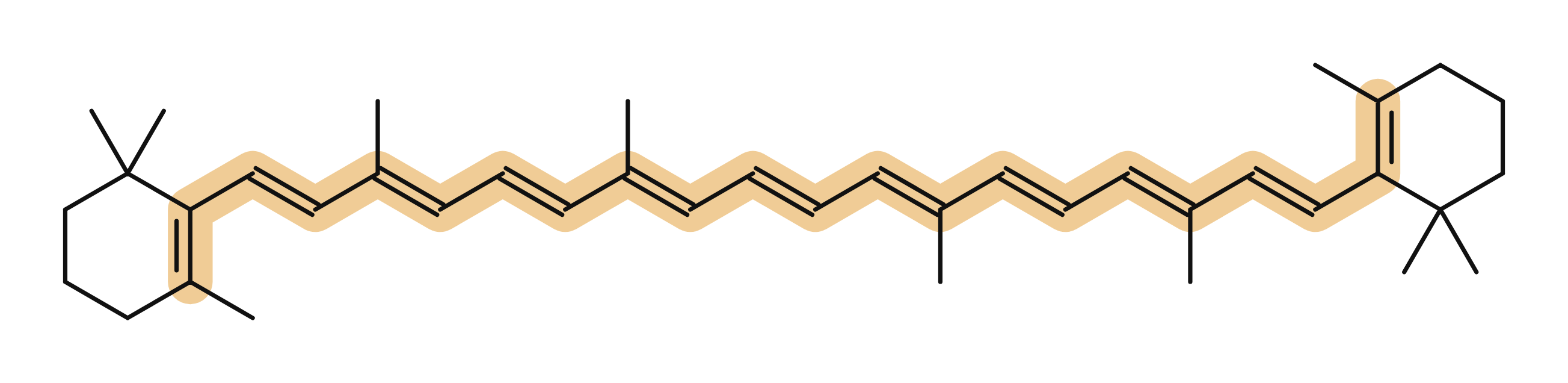
Alternating single and double bonds share one electron cloud
Longer cloud, smaller energy step, longer wavelength absorbed
Beta-carotene: 11 double bonds, absorbs blue, looks orange
Knob one: runway length. But each extra double bond helps less and less; next, a shortcut.
Sources: [9, 17] · full list at the end
Stop 1 · Color · knob 2
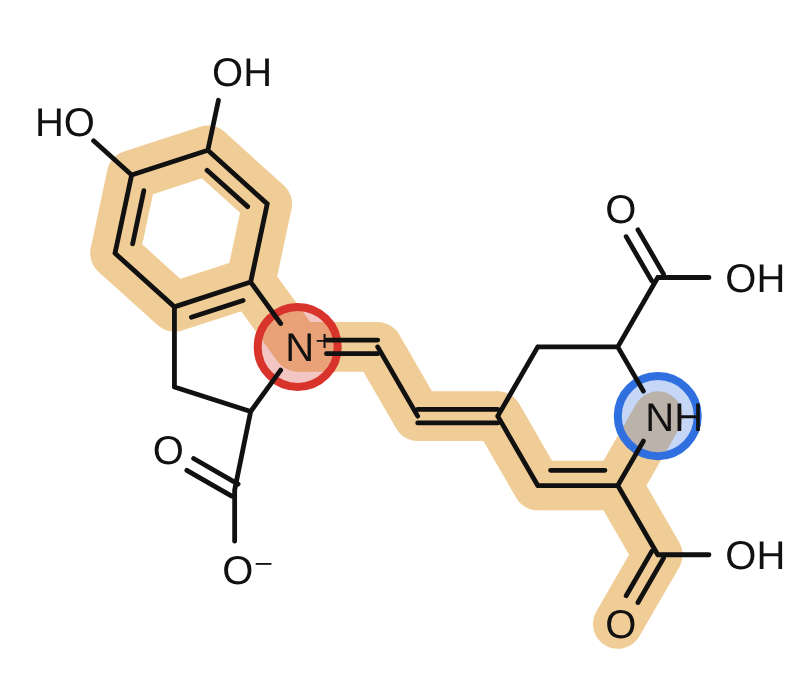
Push–pull beats length
Plain chain: longer, slowly redder
β-carotene needs 11 double bonds just to reach blue (450 nm).
Push–pull chain: the shortcut
N pushes, N⁺ pulls, bonds even out: 3 double bonds reach green.
200
300
400
500
600
700
2
4
6
8
10
12
Double bonds in a row
nm absorbed ↑
● push–pull chains
● plain chains
β-carotene 450
chanterelle 470
betalamic acid 414
fly agaric red 542
On the rainbow: the chanterelle is a long plain chain; the fly agaric is a short push–pull chain, and it wins.
Sources: [12, 17–19] · full list at the end
Stop 1 · Color · knob 3
Same atoms, different color
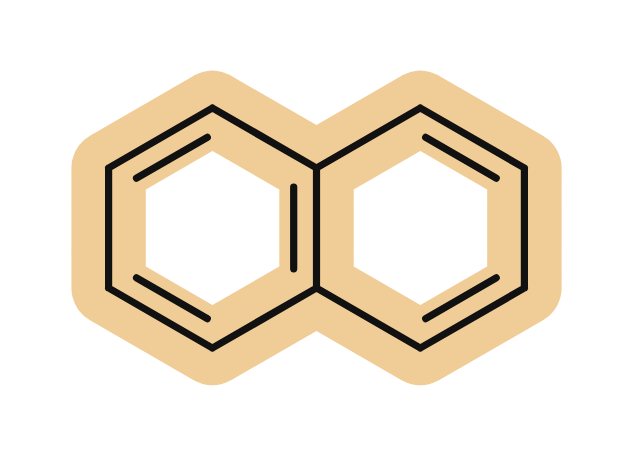
Naphthalene
C10H8 · colorless · mothballs
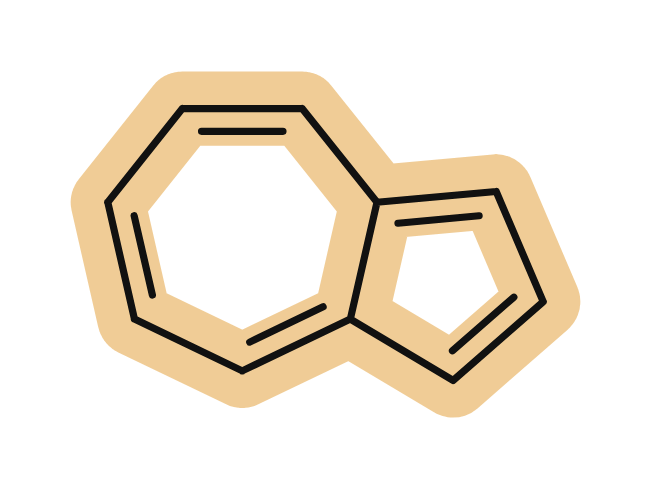
Azulene
C10H8 · deep blue · core of Lactarius indigo's pigment
Naphthalene's electrons spread evenly. Azulene's odd rings pull them lopsided: the 5-ring gains charge, the 7-ring loses it, and the jump to the first empty orbital shrinks enough for yellow light (≈580 nm).
Sources: [15, 20] · full list at the end
Into the visible · warm colors
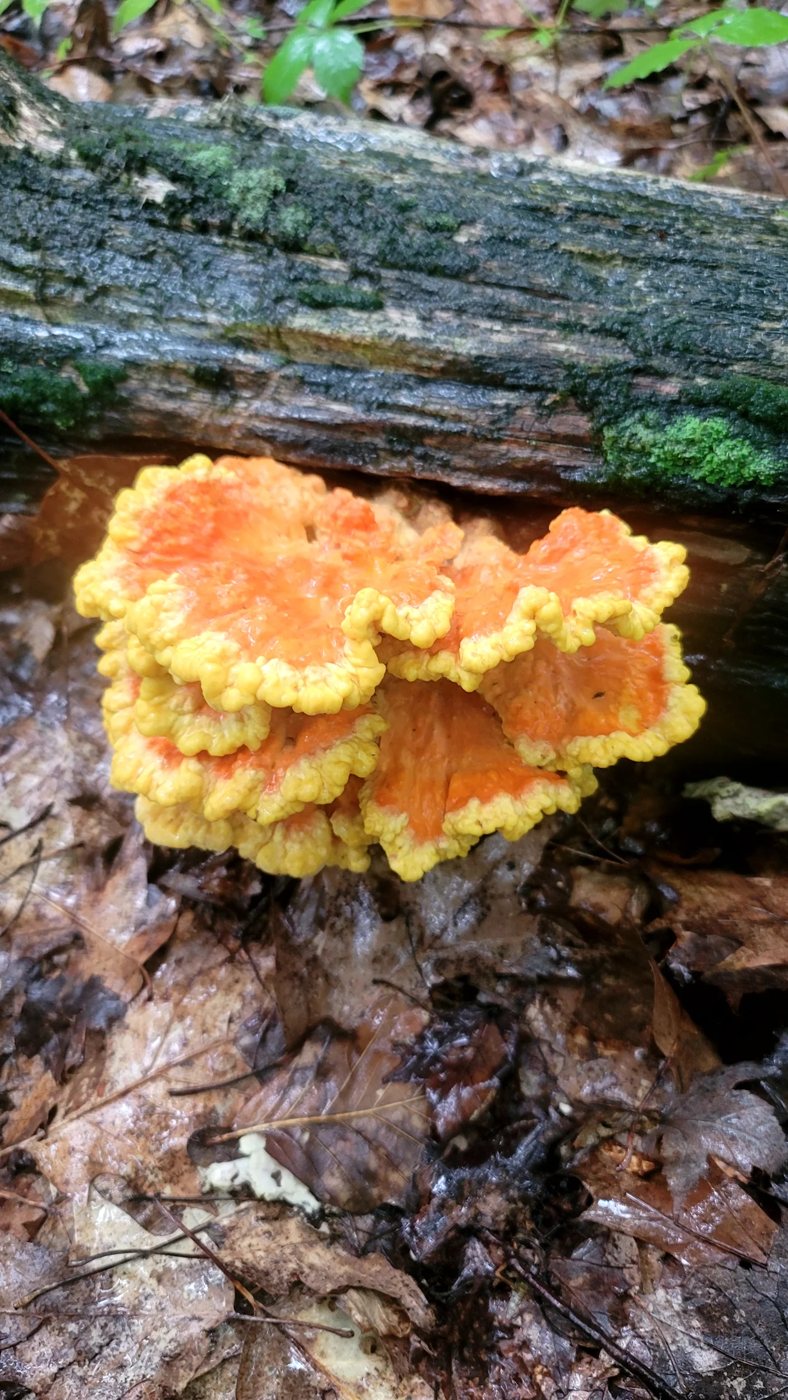
Warm colors: red, orange and yellow
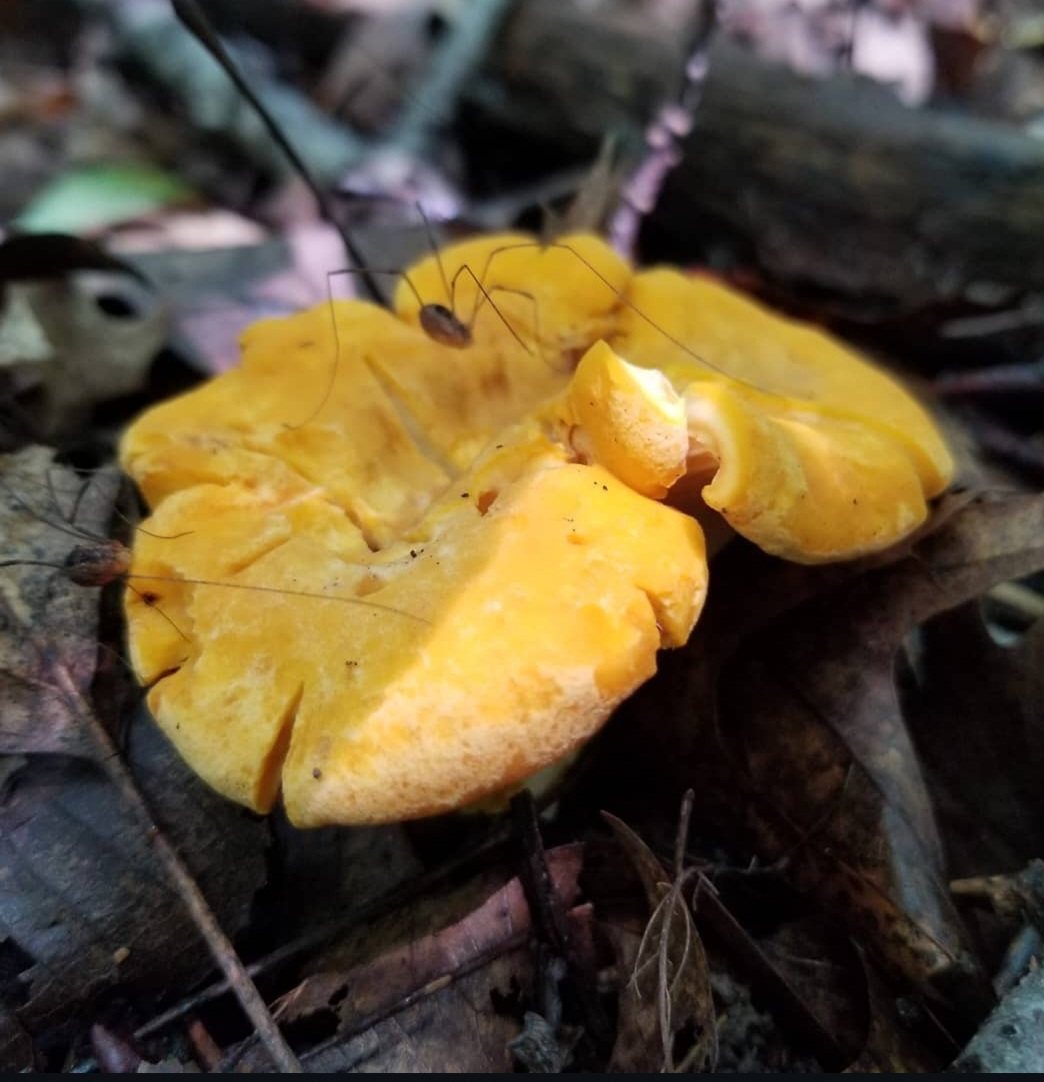
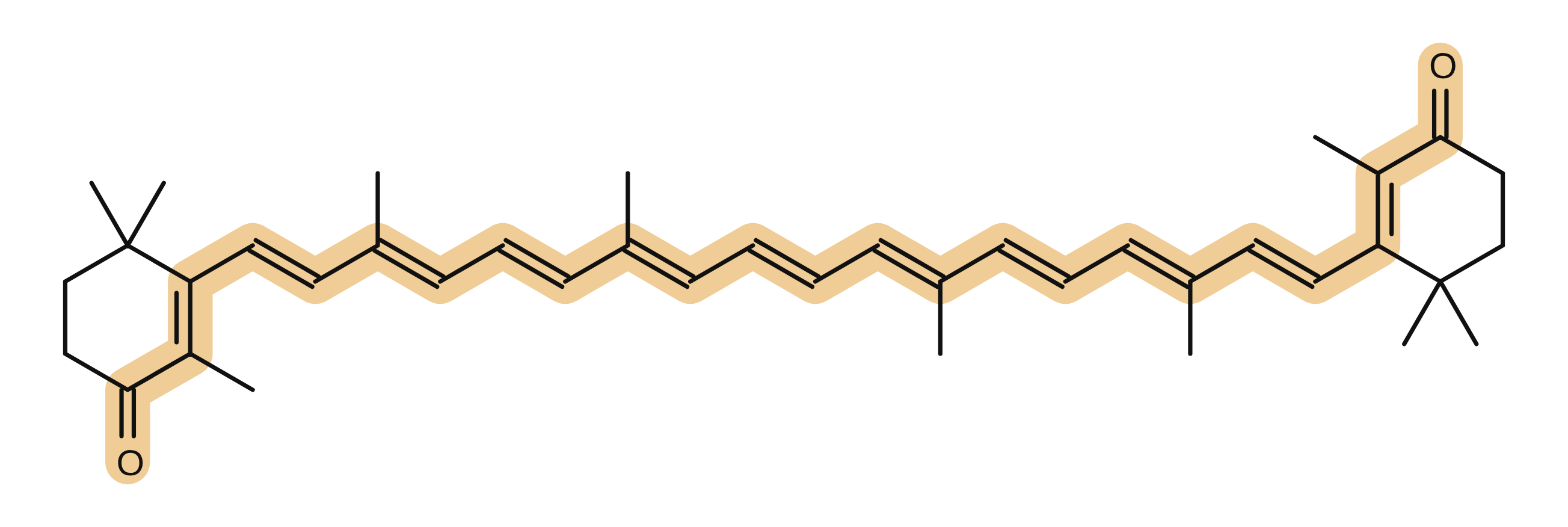
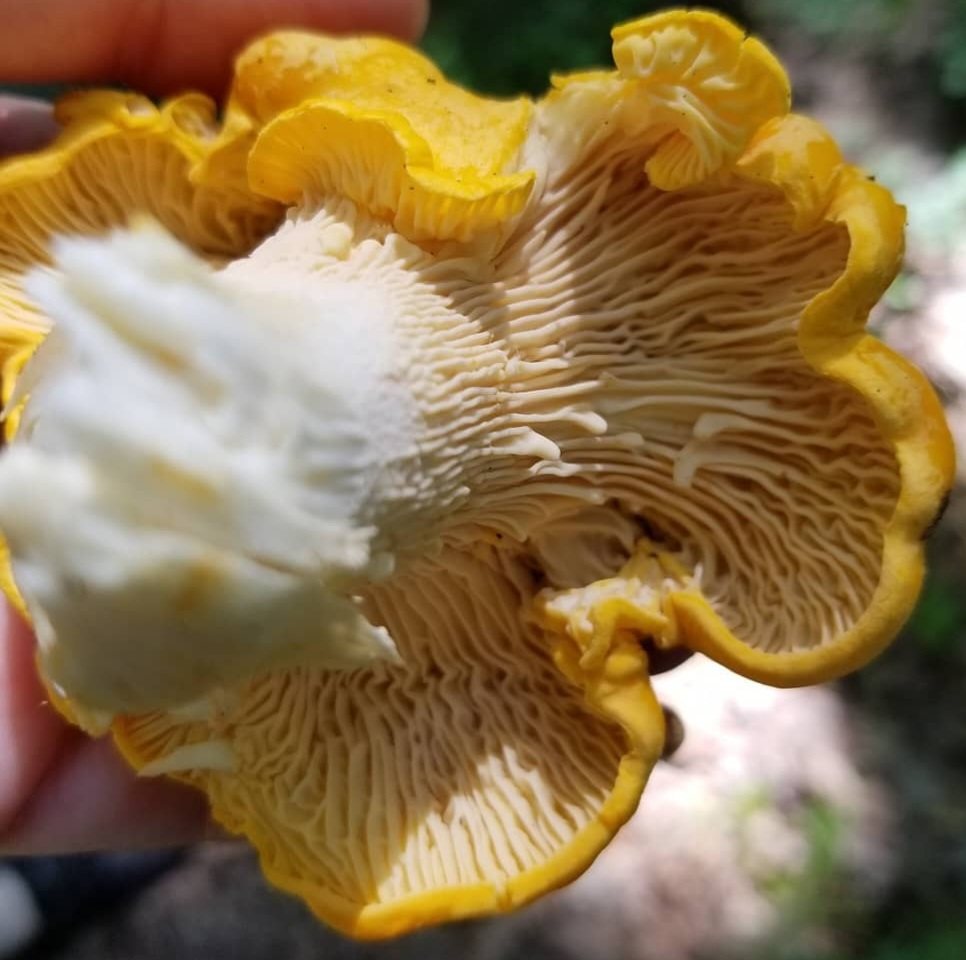
Absorbs ≈420–530 nm → orange
Orange · Chanterelle
Long runway: 13 double bonds, but plain chains redden slowly
Sources: [12, 13, 19, 21, 22] · full list at the end
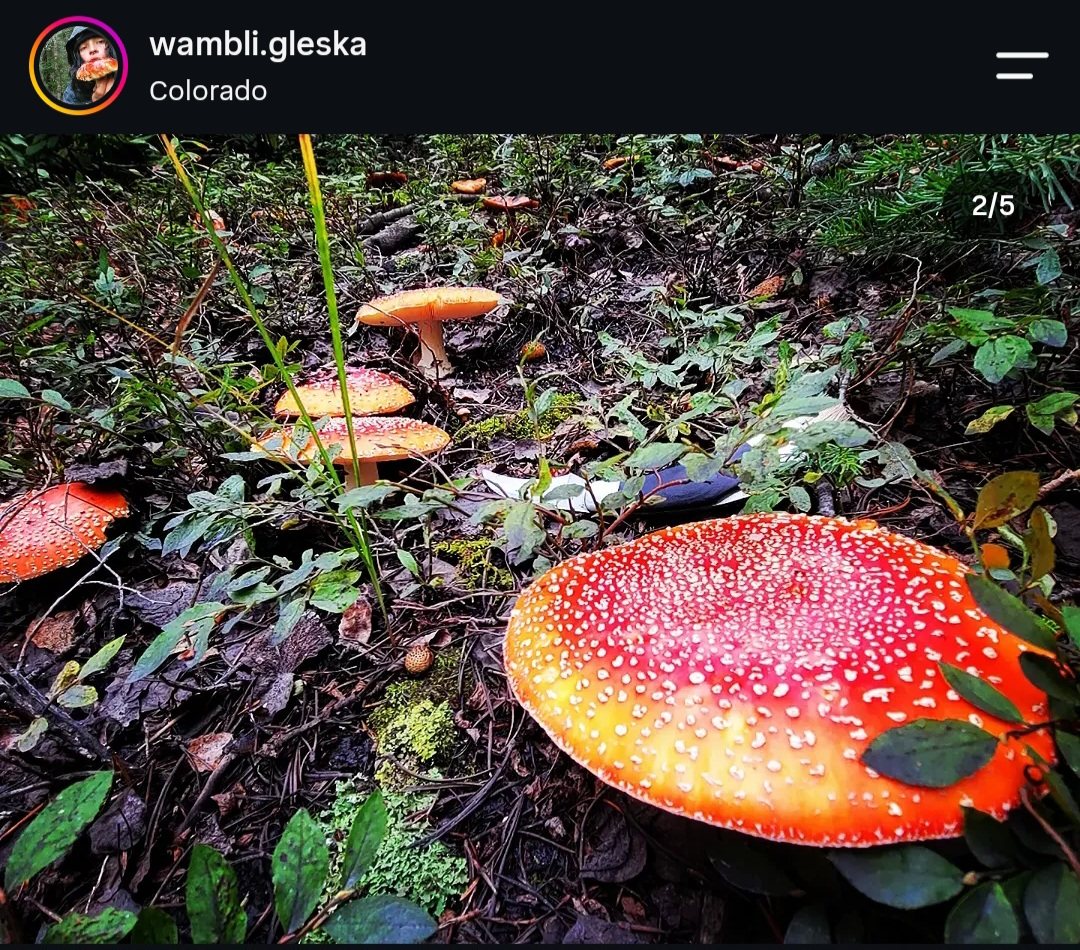
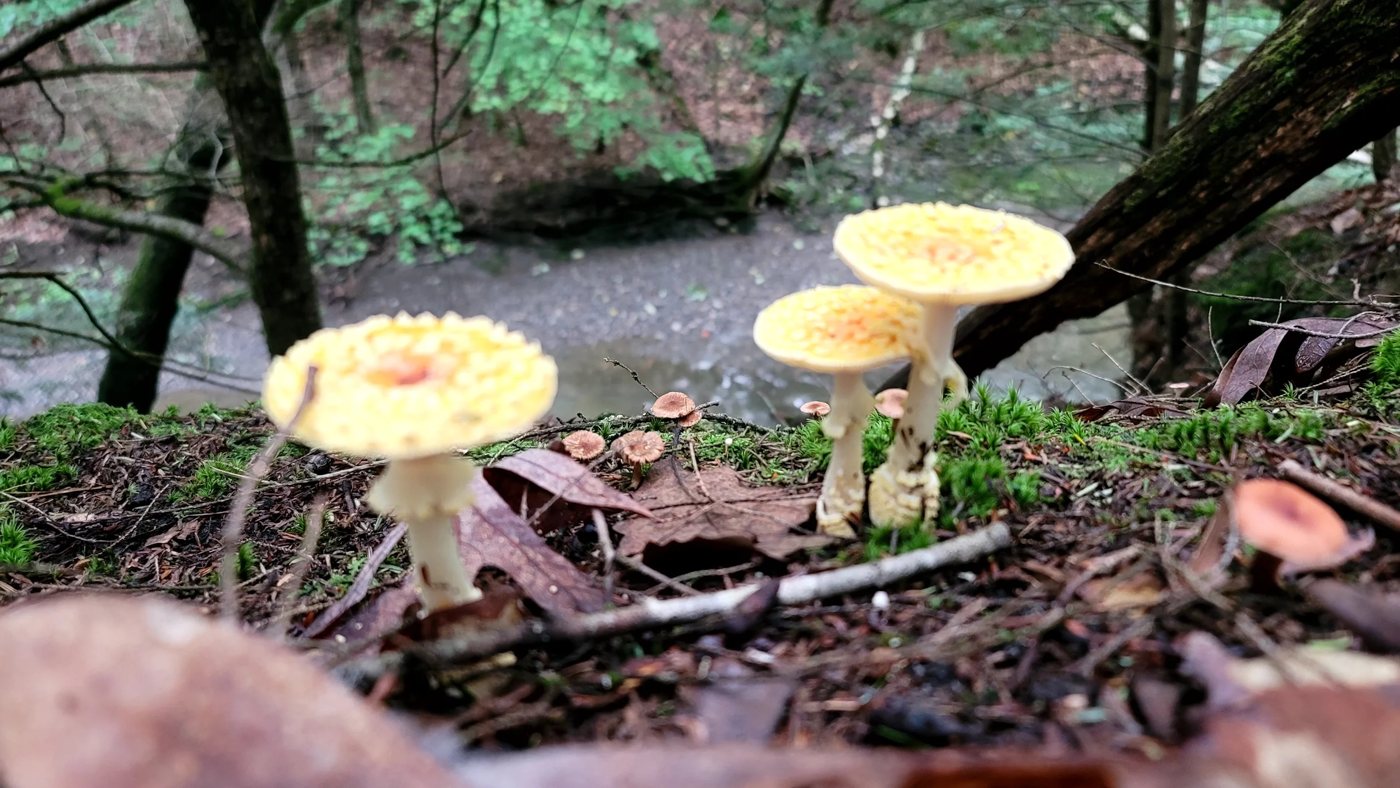
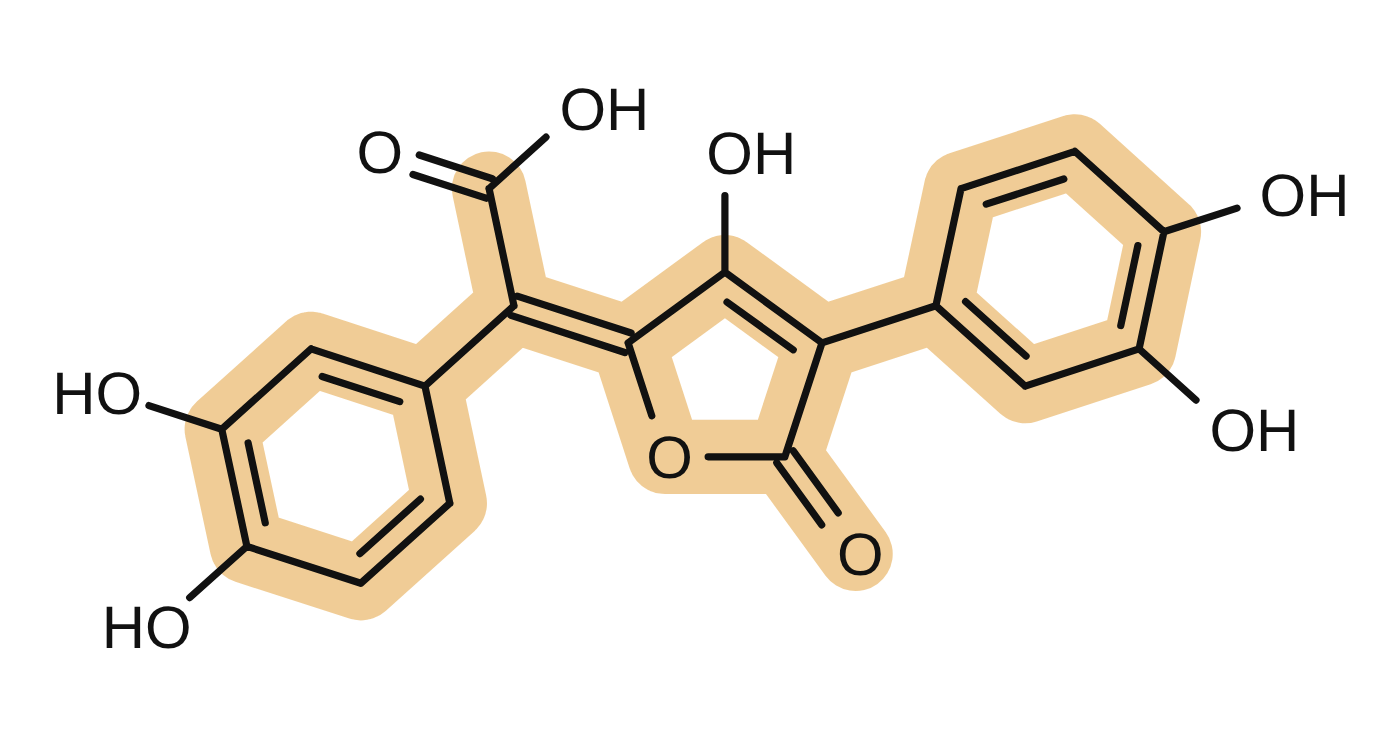
Absorbs ≈440–570 nm → red
Red · Fly agaric
Push–pull: N pushes, N⁺ pulls; 3 double bonds reach green
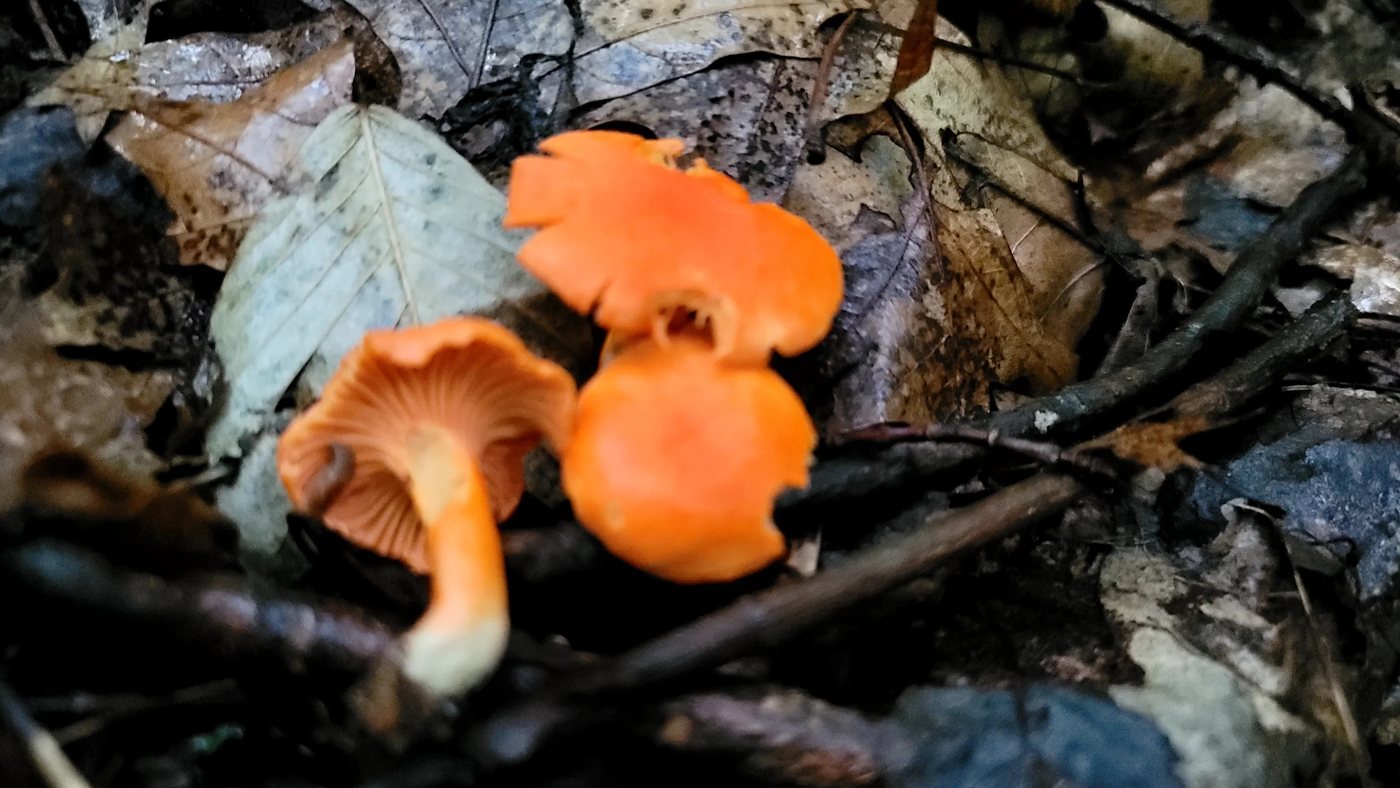
Absorbs ≈380–480 nm → yellow
Yellow · Bolete
Shorter runway: a smaller cloud, so it stops at blue
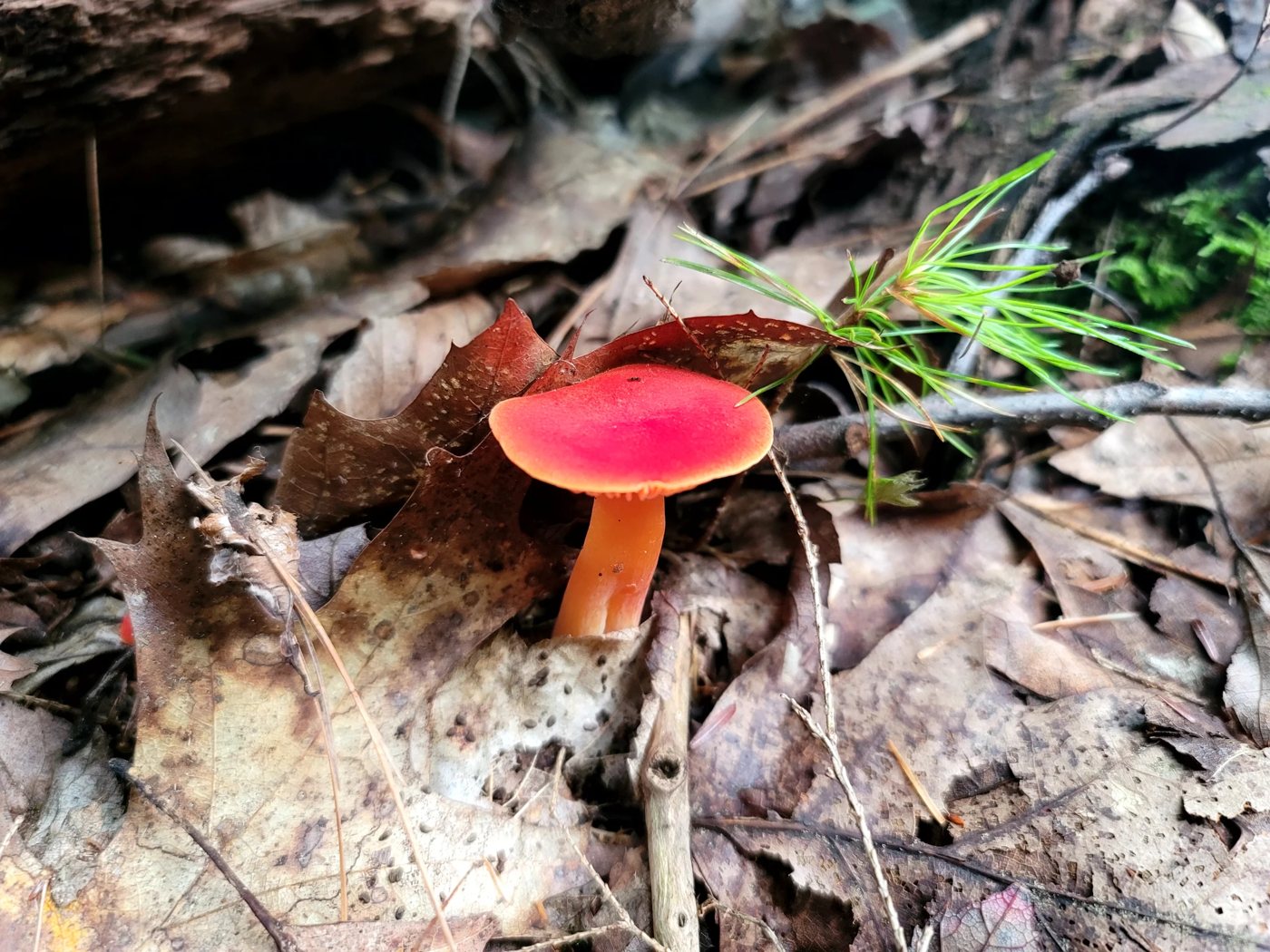
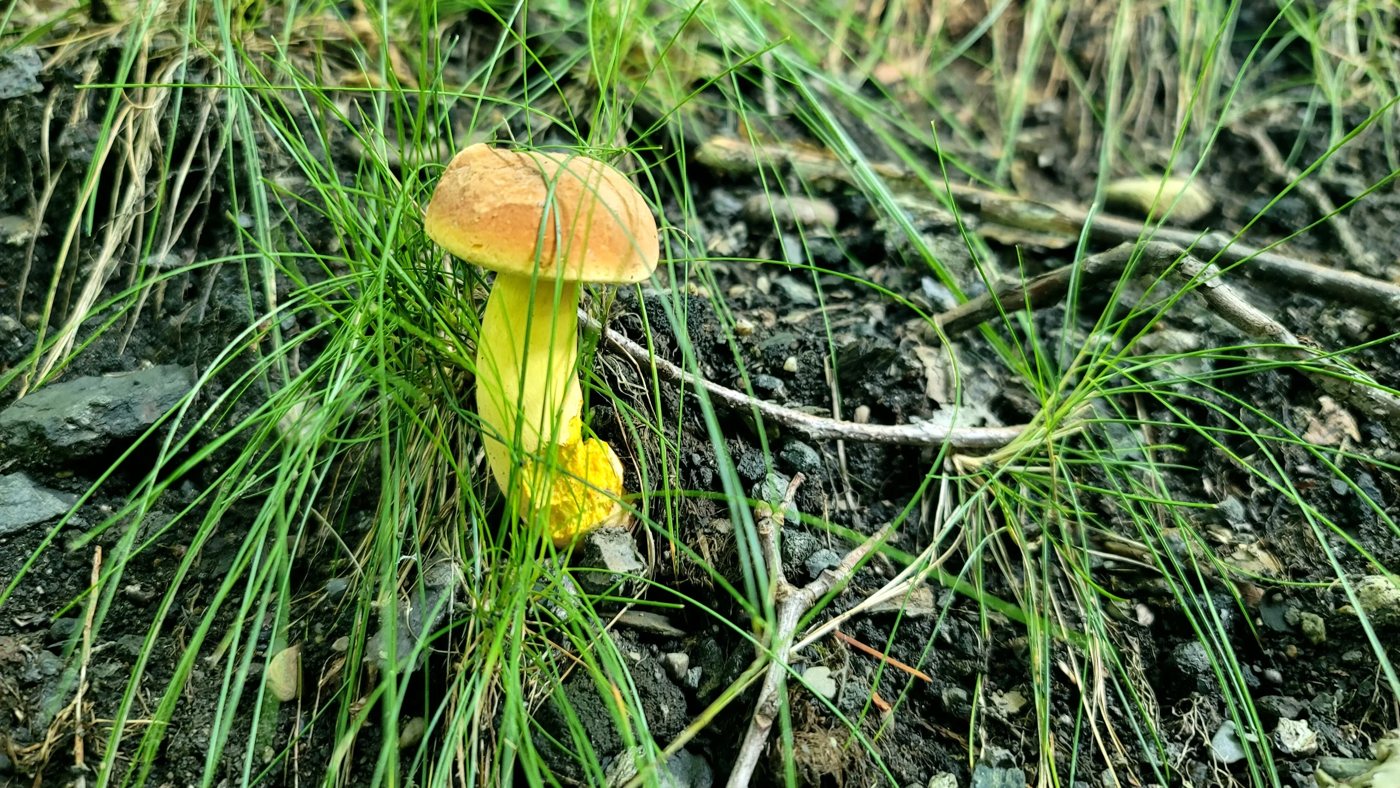
Photo by Clarissa Arana
Sources: [13–16] · full list at the end
Into the visible · cool colors
Cool colors: green, blue and violet
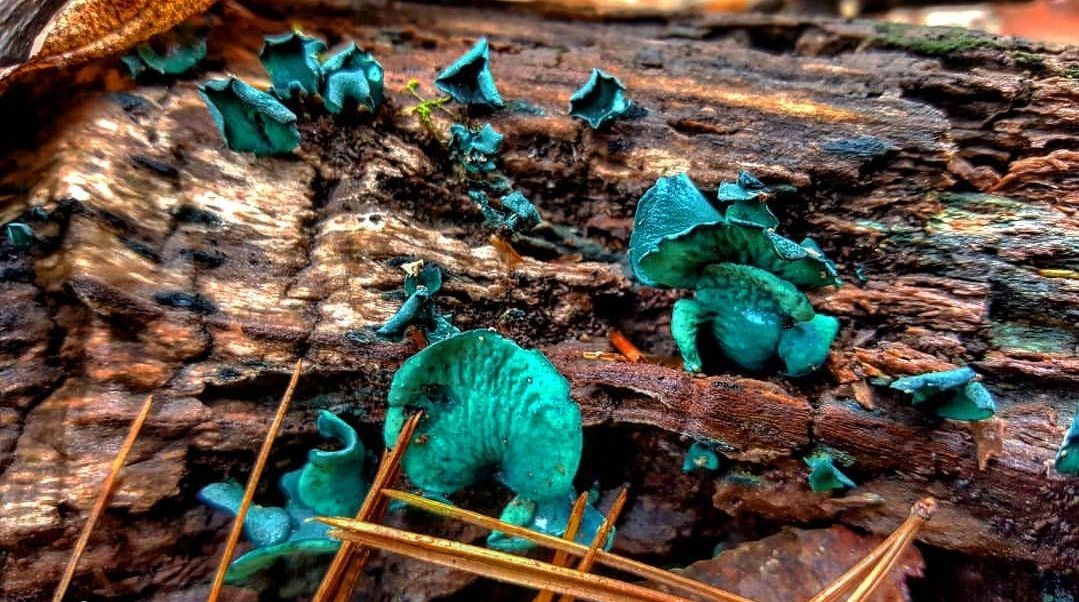
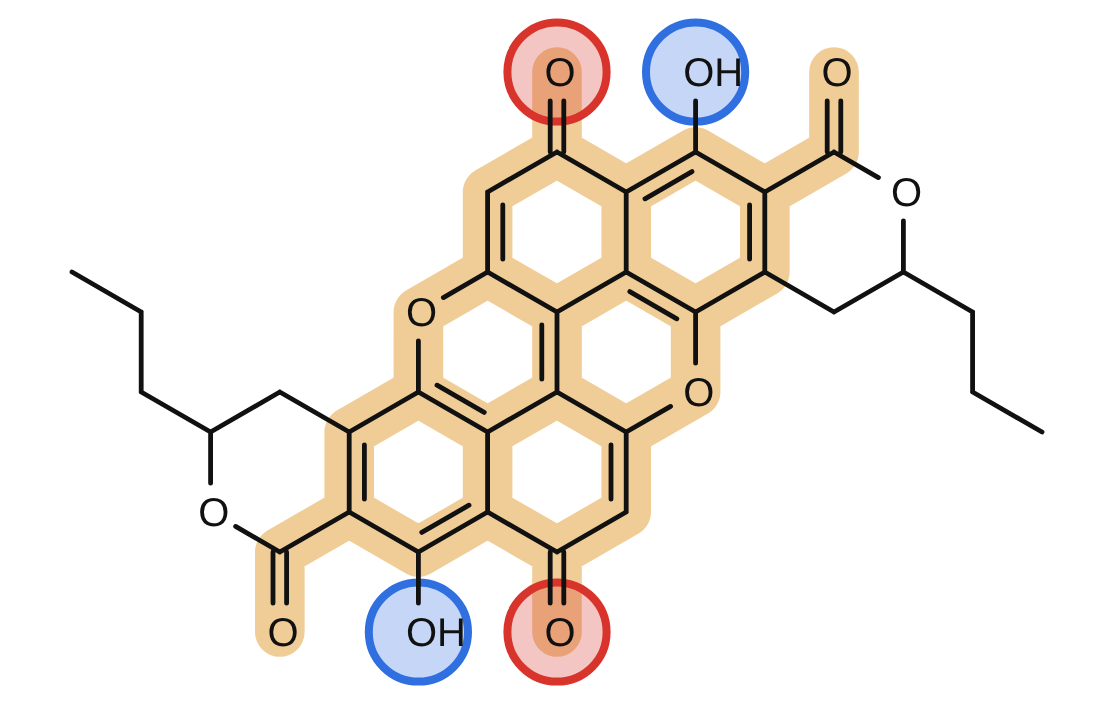
Absorbs ≈590–700 nm → blue-green
Green · Green elfcup
Sheet + push–pull: eight fused rings; OH pushes, C=O pulls
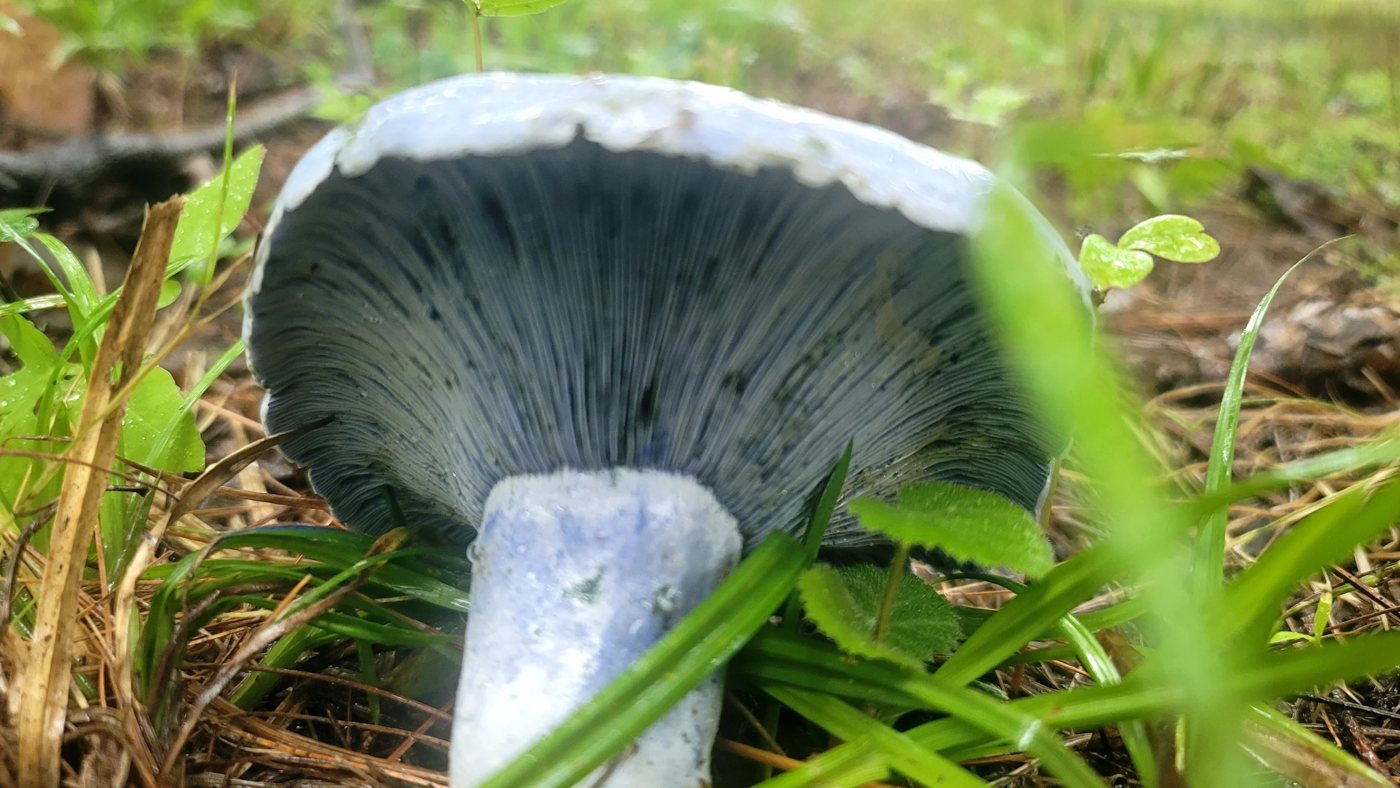
Absorbs ≈530–640 nm → blue
Blue · Indigo milk cap
Shape: lopsided 7+5 rings, same atoms as colorless naphthalene
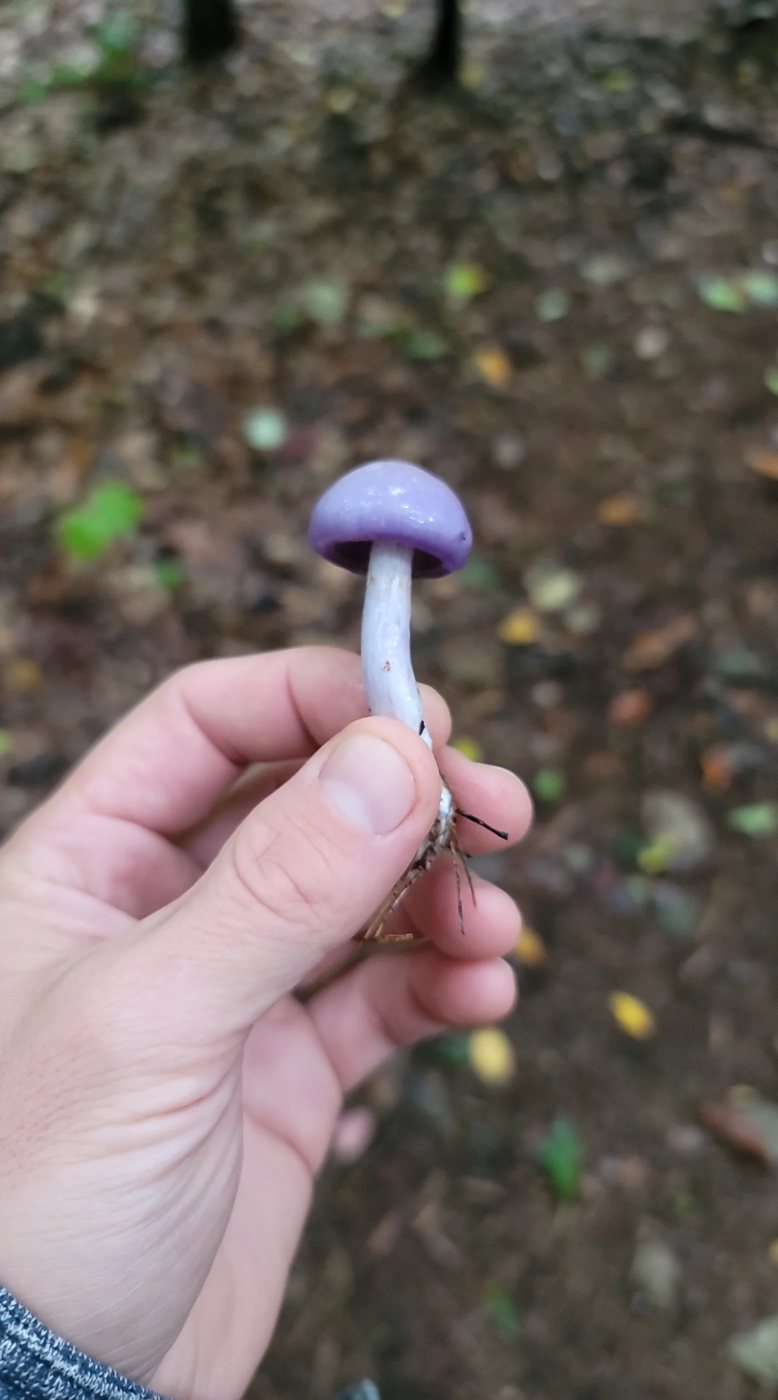
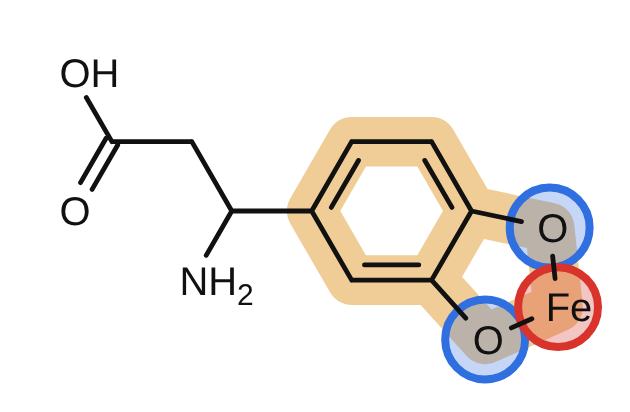
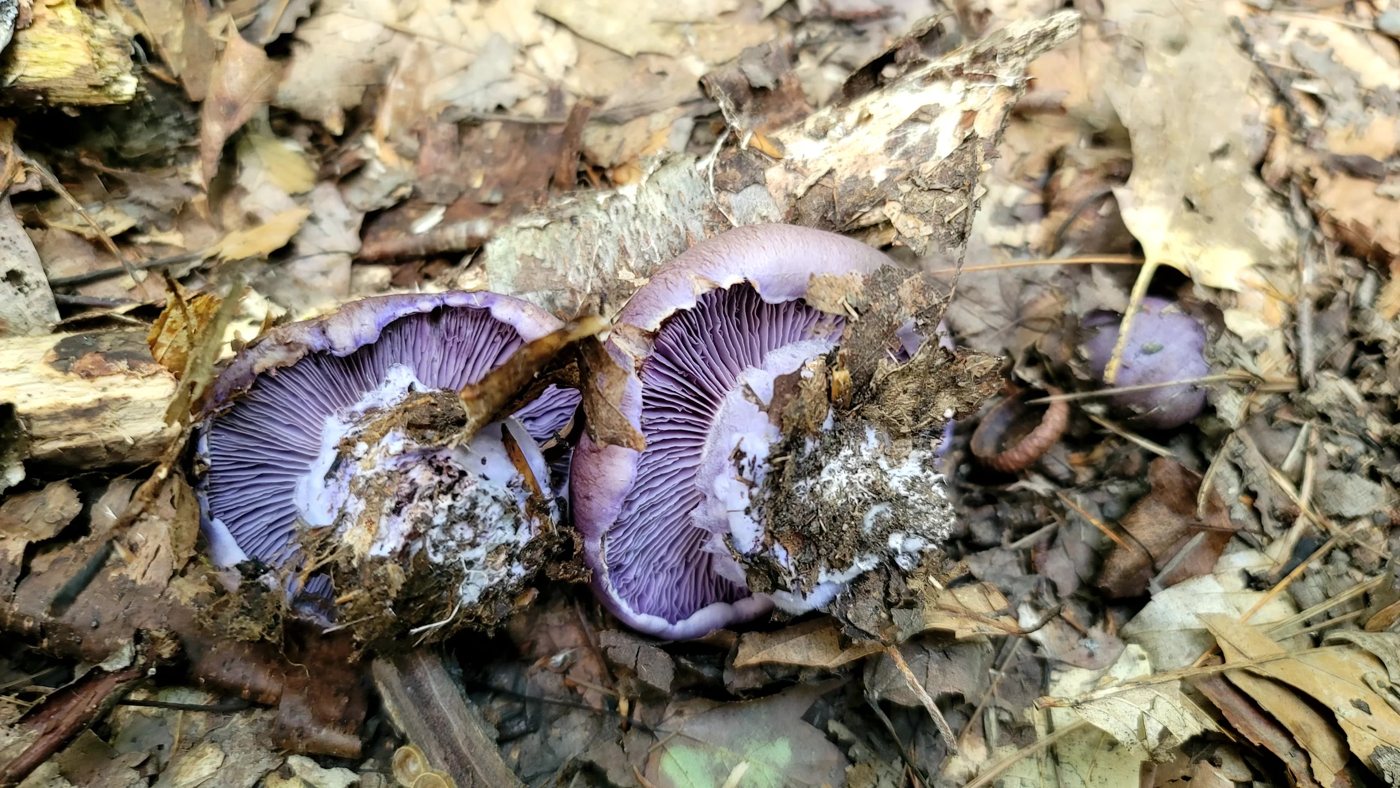
Absorbs ≈500–620 nm → violet
Violet · Violet webcap
Charge transfer: the catechol hands an electron to iron
Into the visible · color on demand
Why mushrooms bruise blue
Sources: [13, 23–25, 67] · full list at the end
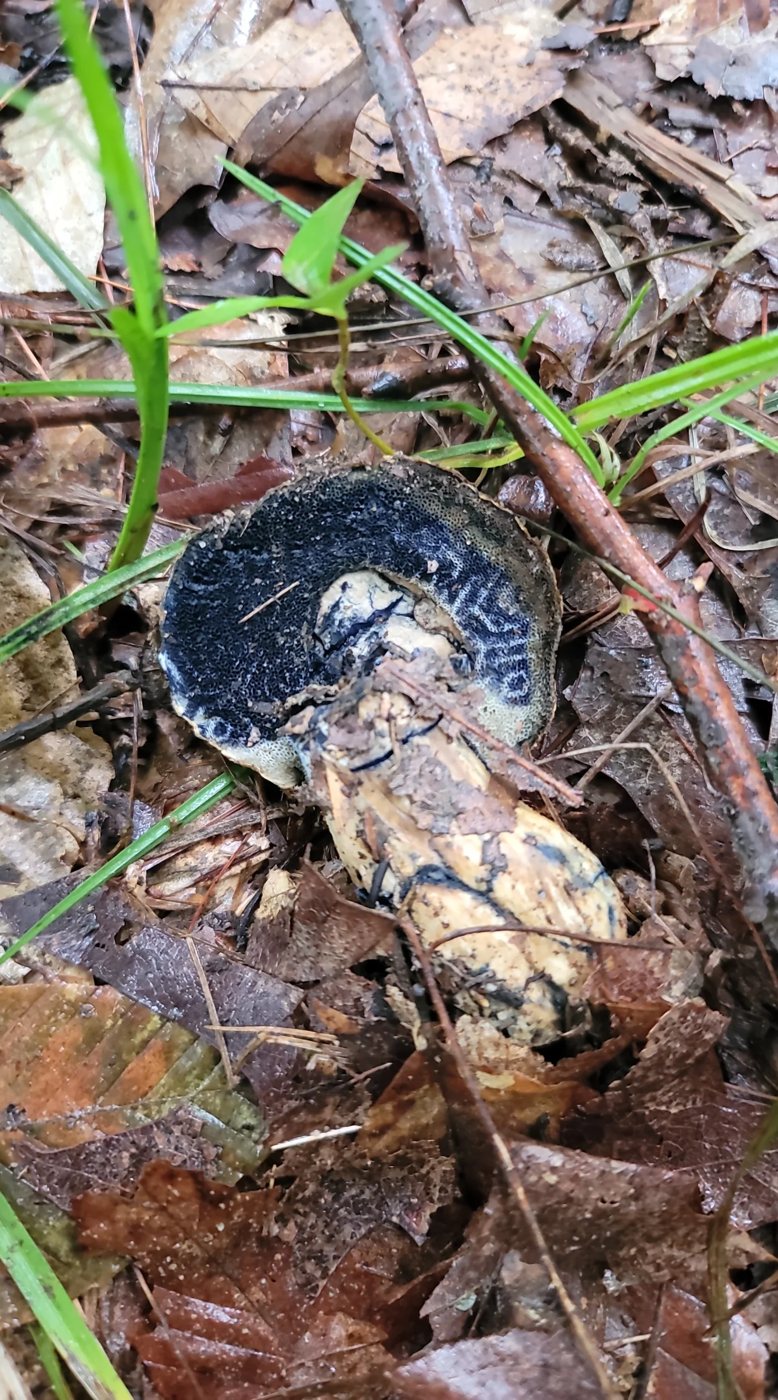
Why blue?
Probably a side effect, not a signal.
Injury lets enzymes reach pigments kept apart in intact cells.
Variegatic acid may feed iron to wood-rot chemistry [24]; disputed [67].
Sources: [26] · full list at the end
Into the visible · the extremes
Black and white: absorb everything, or nothing
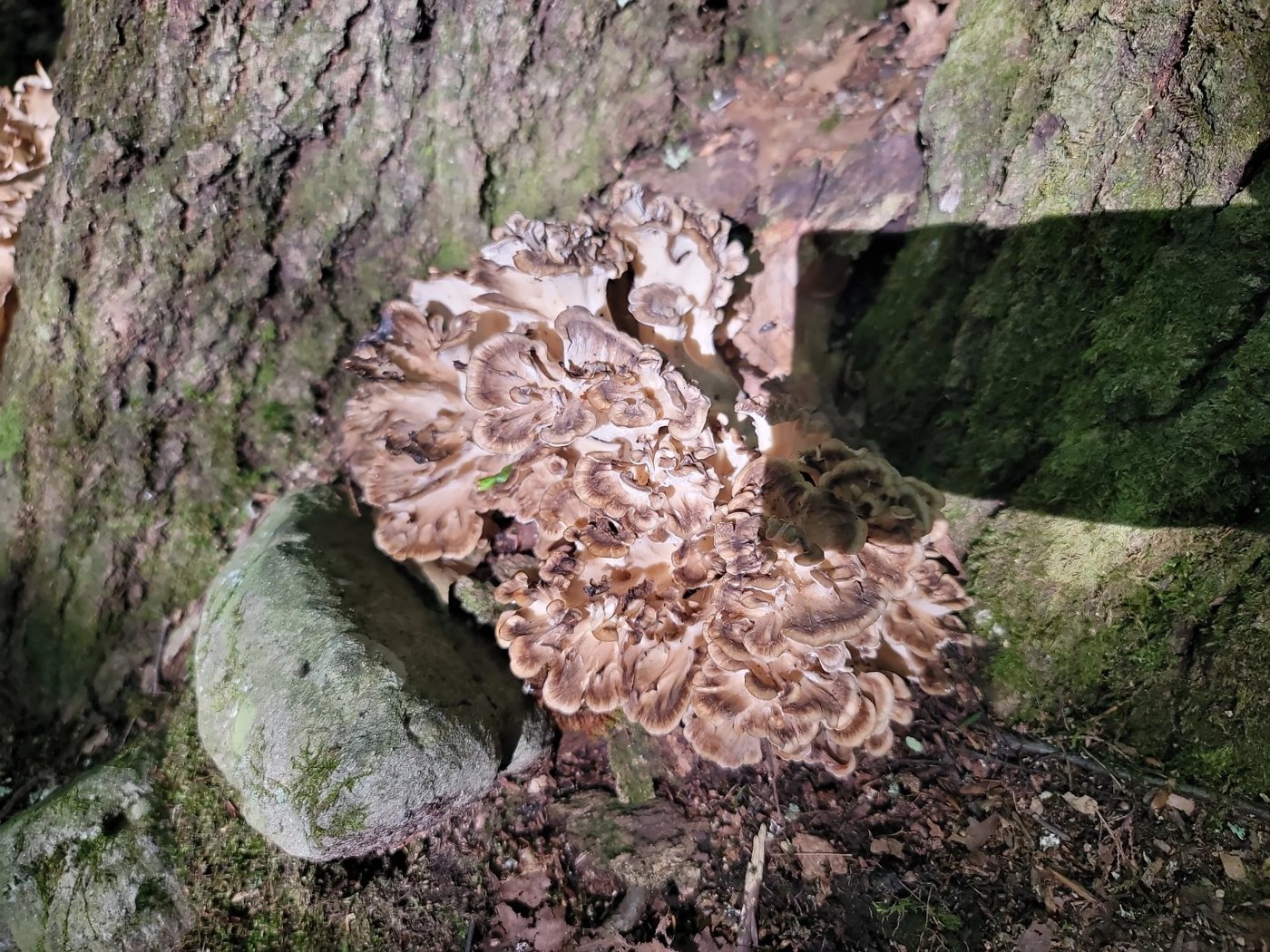
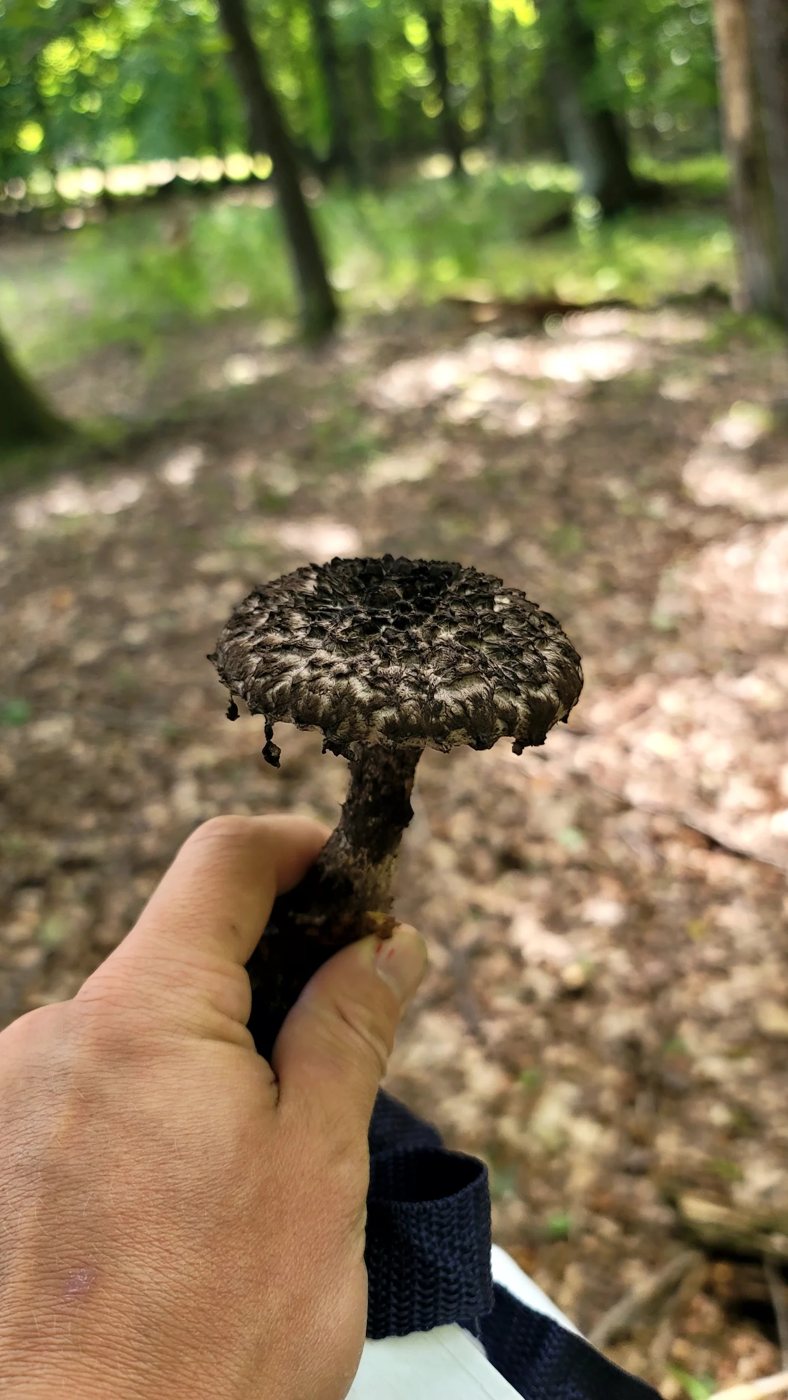
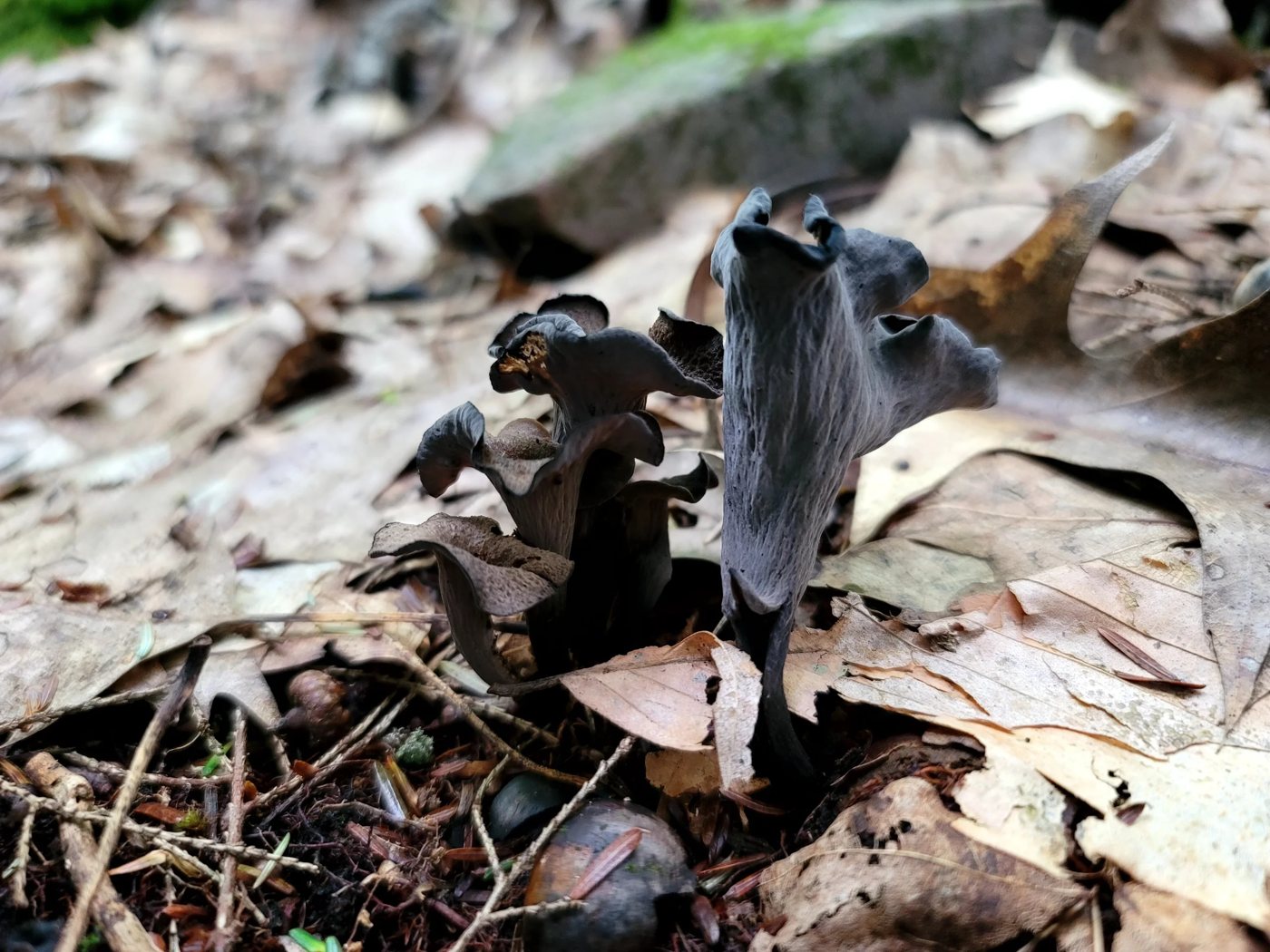
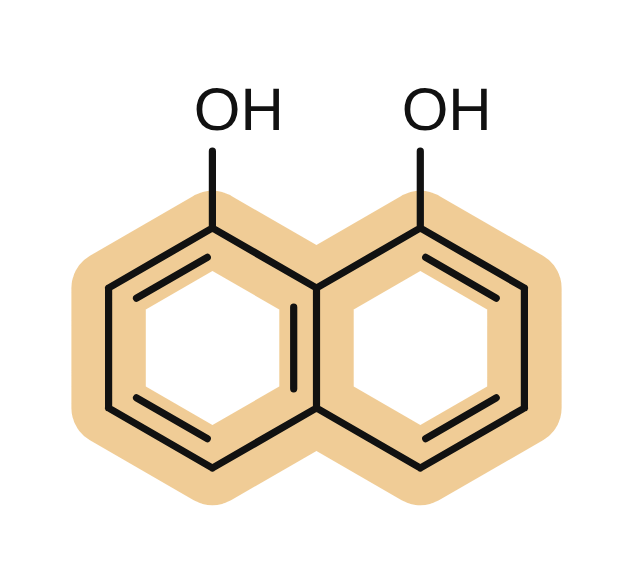
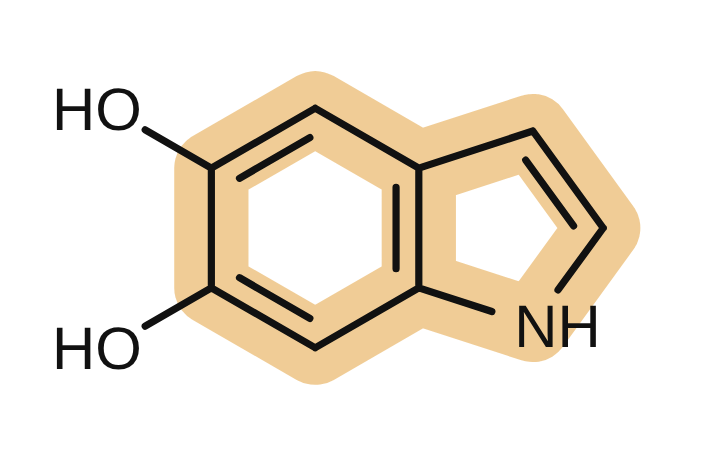
Many overlapping bands → black
Black · Melanized fungi
Every gap at once: a jumble of units, chain lengths and stacks, each absorbing its own color; together, all of them
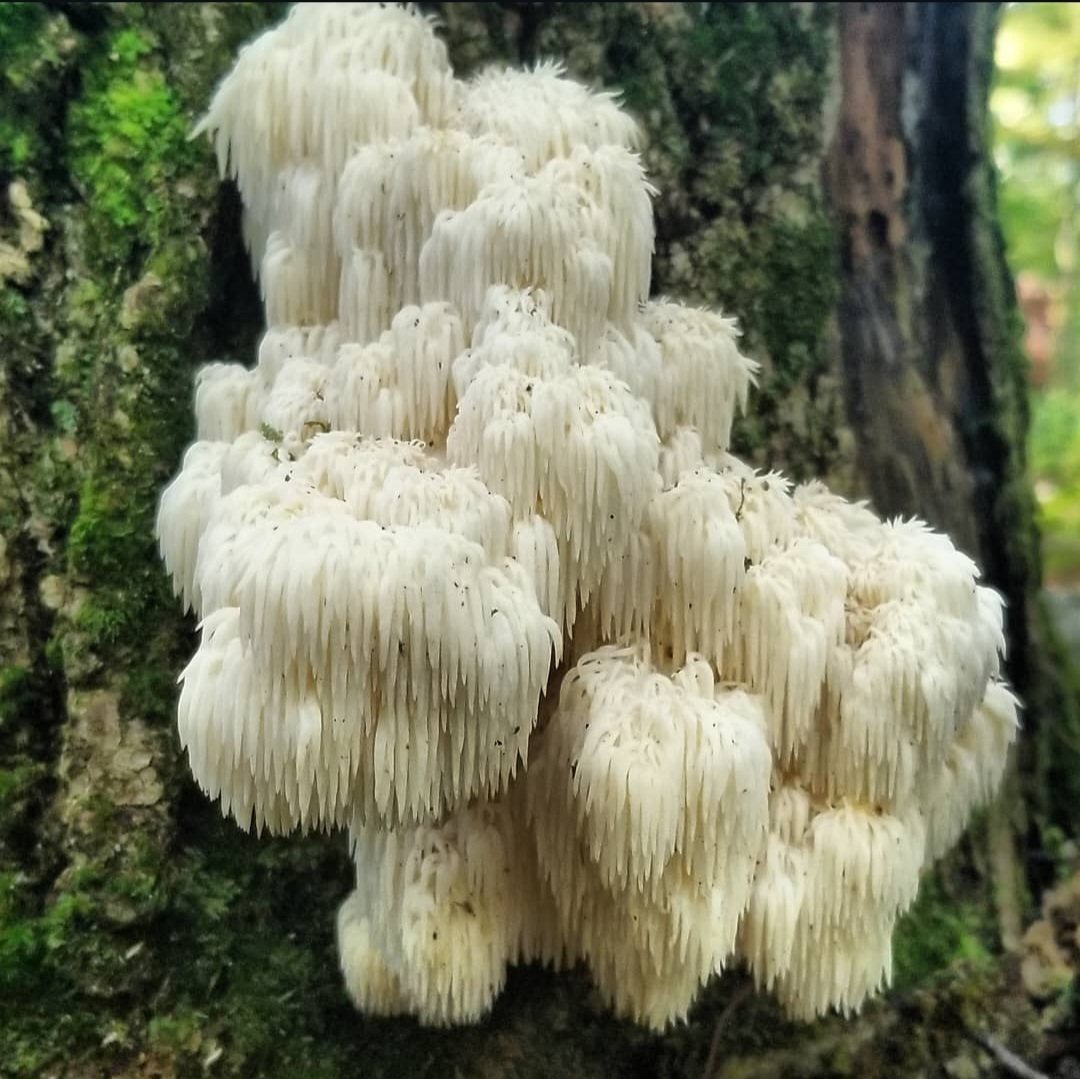
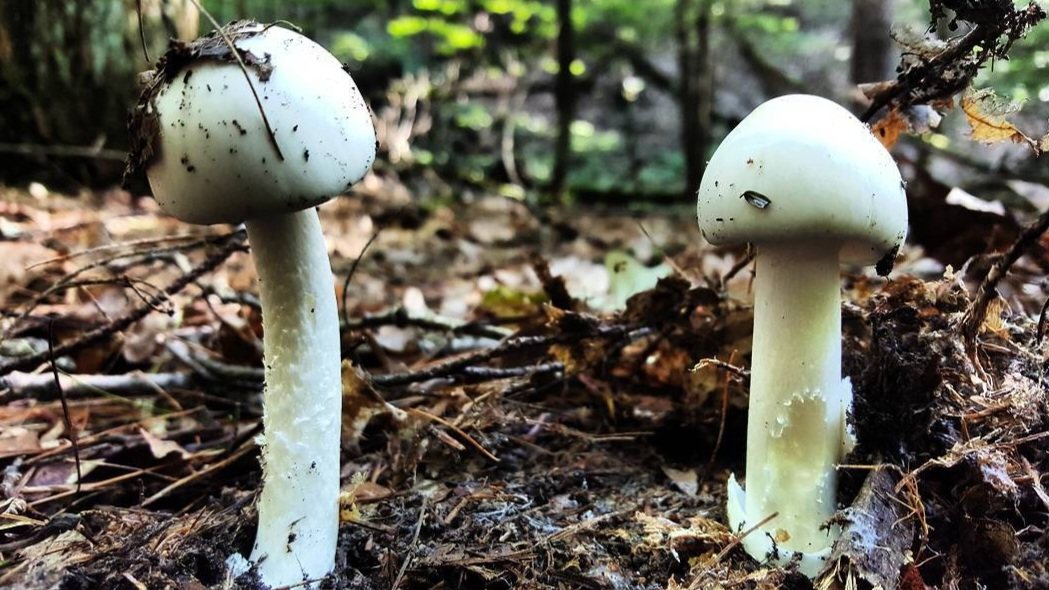
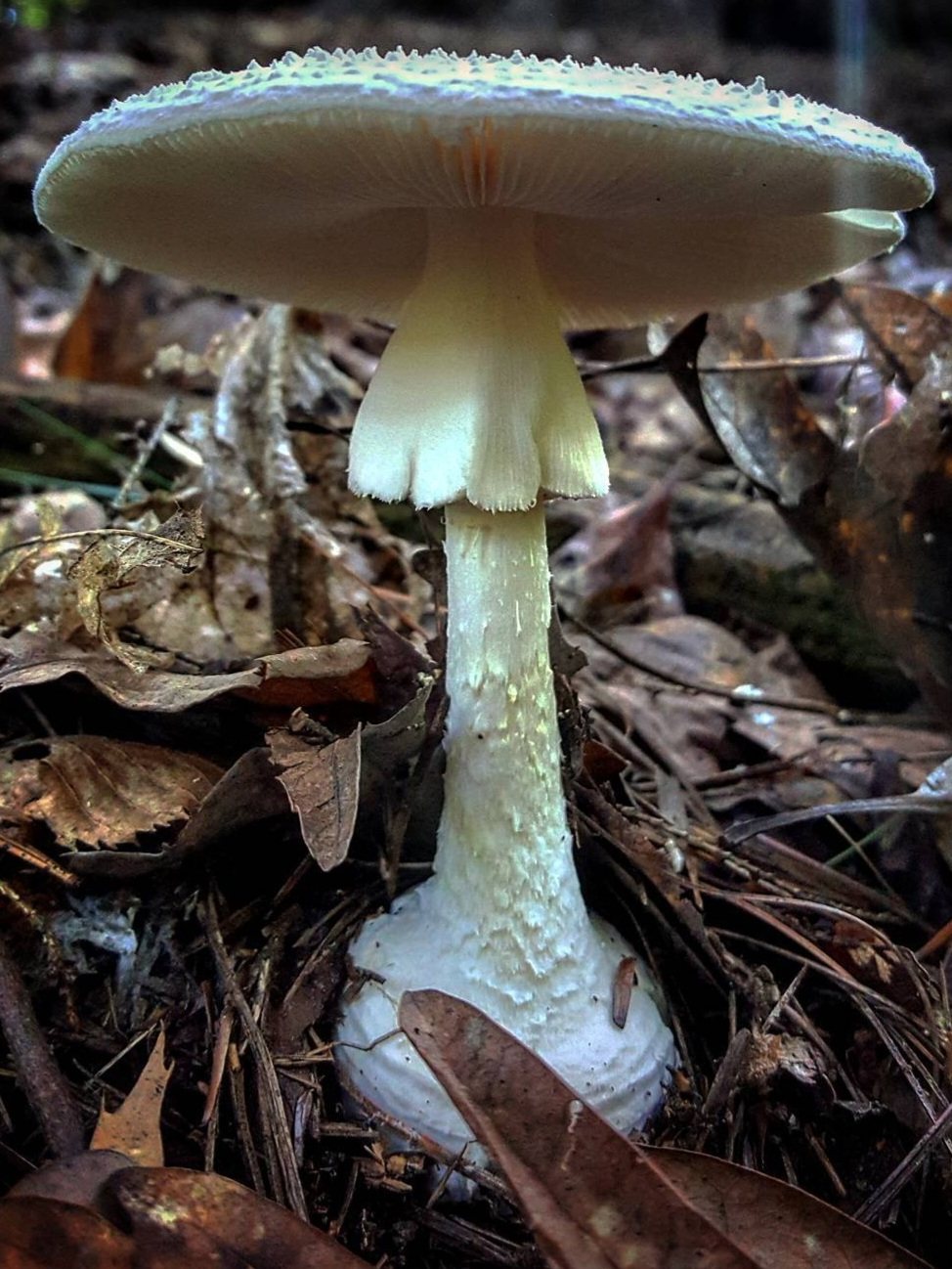
Absorbs nothing → white
White · Button mushroom
No chromophore: hyphae and air pockets scatter every color back
After absorption
An excited electron has five ways out
Next stops: Glow runs 02 on chemistry · UV uses 03 and 04 · Seeing uses 03 · Melanin is 01.
Sources: [27–30] · full list at the end
Sources: [31–34] · full list at the end
Stop 2 · Glow
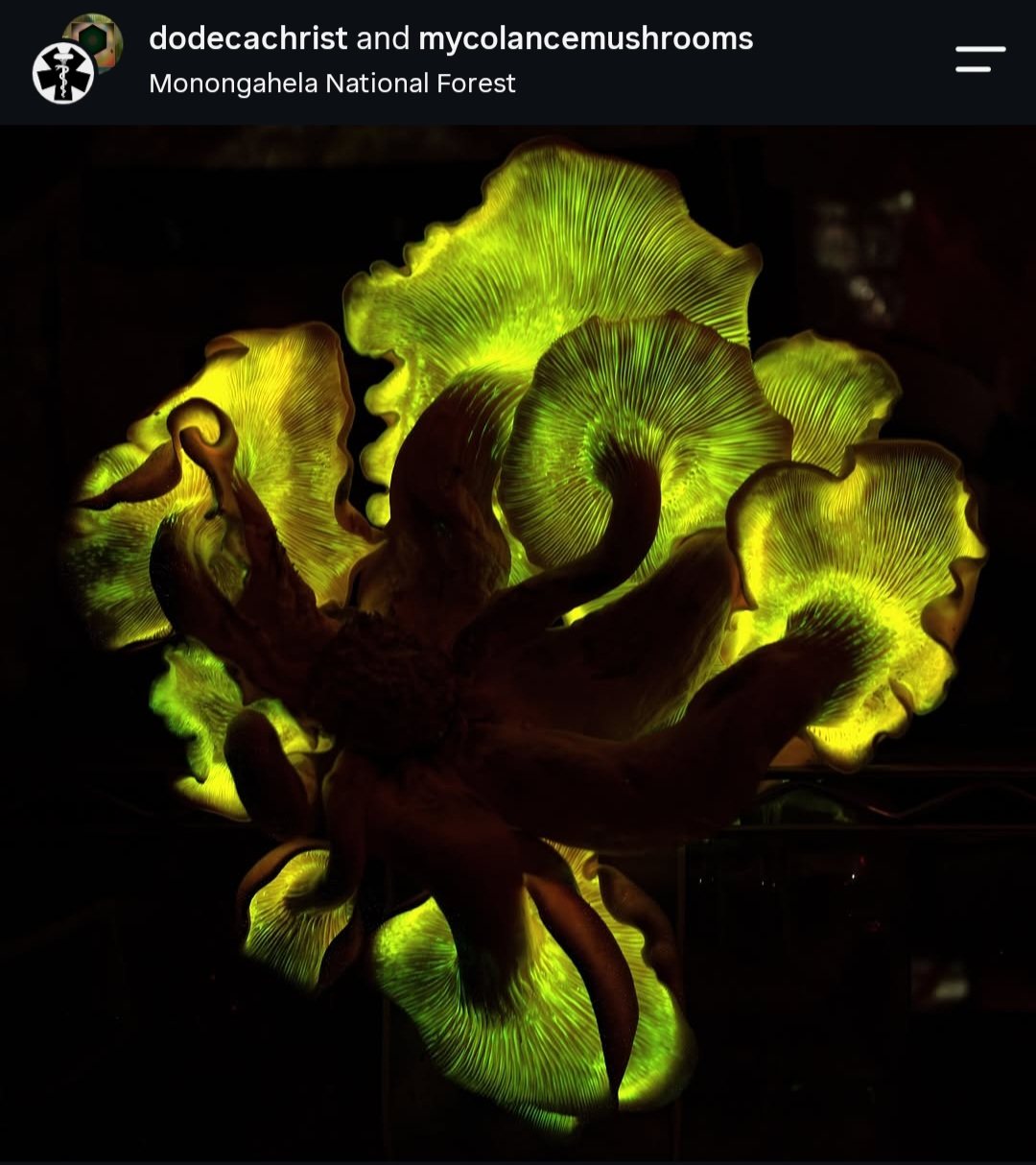
Glow: chemistry does the exciting
Red circles: what changes at each step. Losing CO₂ pays for the photon (≈2.4 eV).
1 · Build the fuel
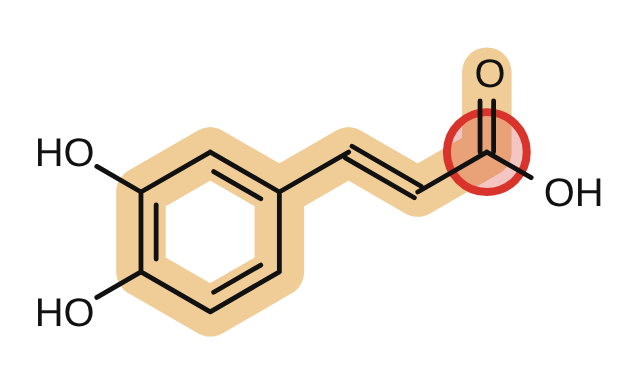
Caffeic acid
→
+ ring
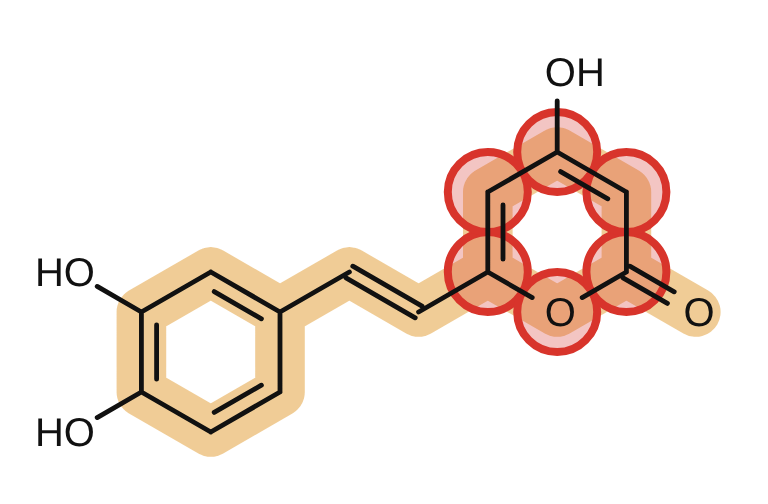
Hispidin
→
+ OH
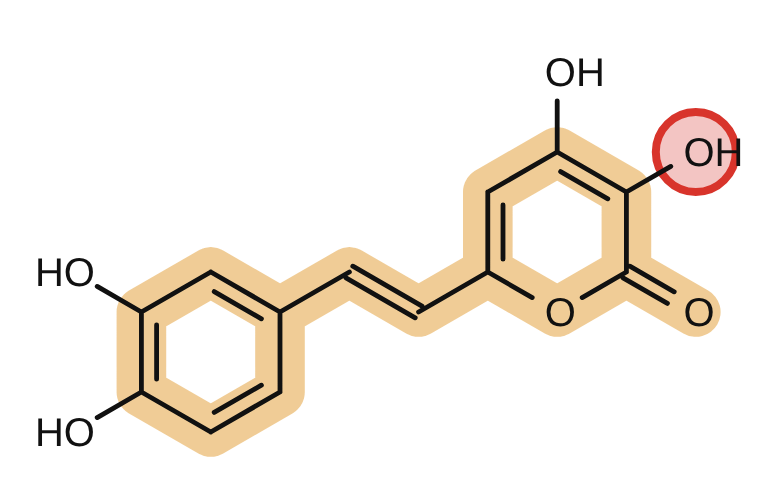
3-OH-hispidin (fuel)
2 · Burn it for light
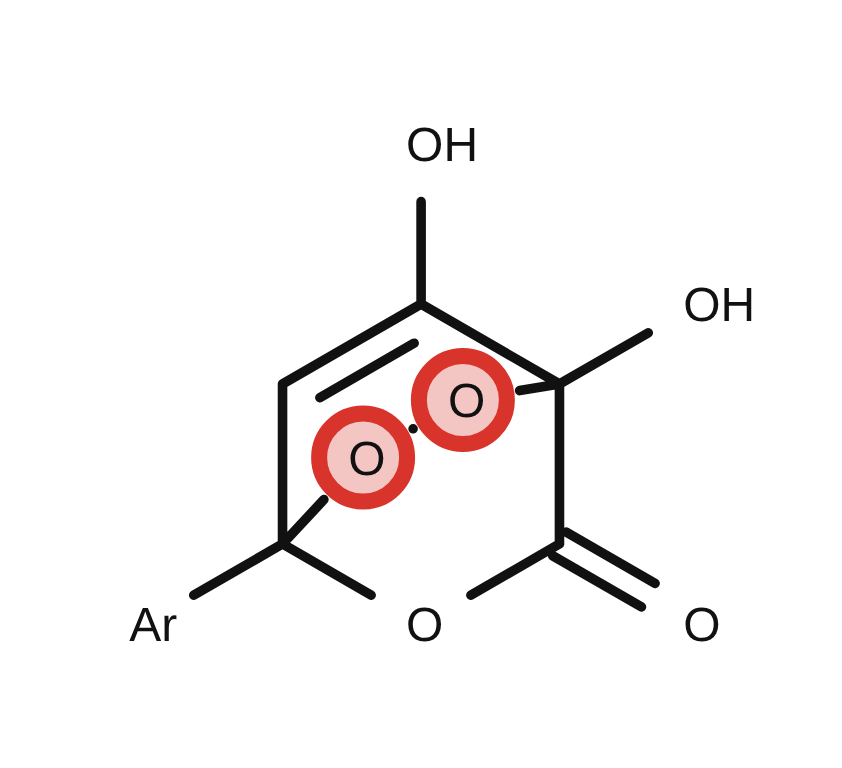
O–O ring (unstable)
→
− CO₂
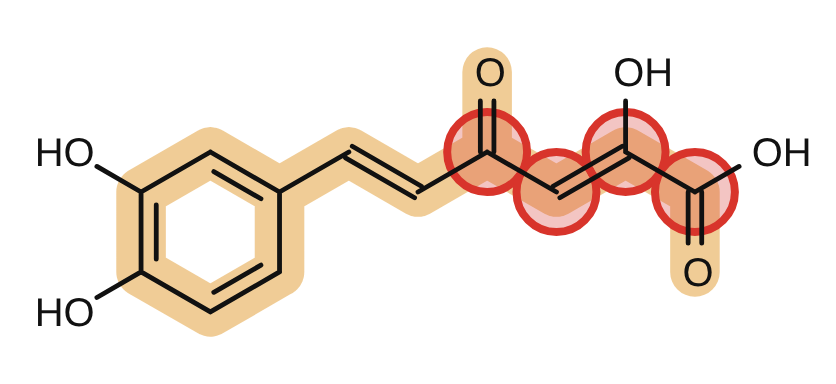
Caffeylpyruvic acid*
→
light
green light ≈520 nm
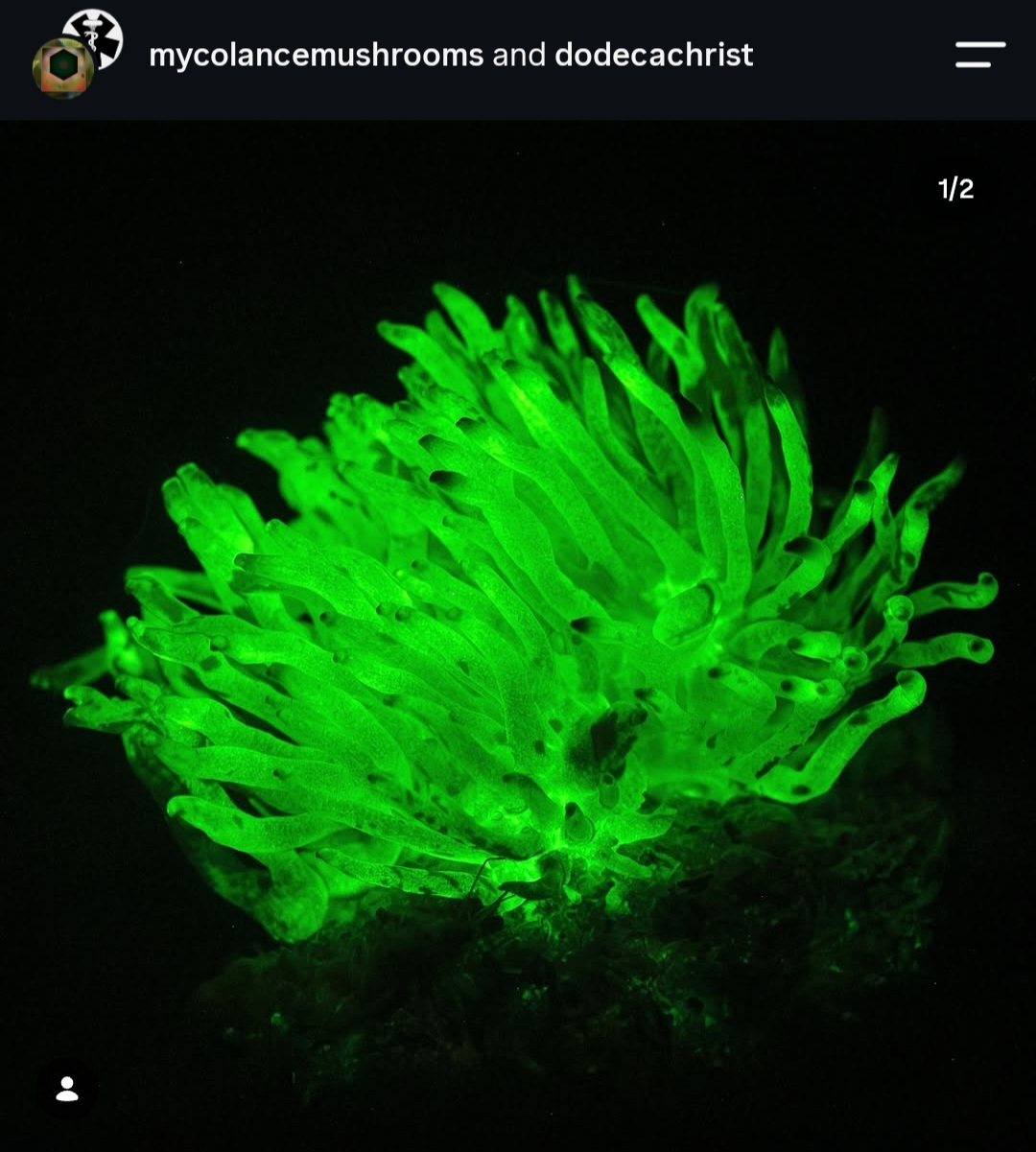
Photos by Tyler Brunner
Stop 3 · UV
UV: damage, defense and vitamin D
UV photons carry 3–4+ eV: enough to break and rearrange bonds, not just lift electrons.
Sources: [10, 11, 35, 36] · full list at the end
Stop 4 · Seeing
Seeing: fungi sense light with our toolkit
Three chromophores we share with fungi, flavin, retinal and a bilin, plus one lens.
Sources: [30, 37–43] · full list at the end
Stop 5 · Melanin
One pigment, three places
Same chemistry everywhere: soak up light, return it as heat, mop up radicals.
Sources: [26, 44–46] · full list at the end
Stop 6 · Ionizing radiation
Five kinds of radiation, five kinds of armor
Radon: the alpha you breathe
Radium in soil decays into radon gas that seeps into basements. Skin blocks its alphas, but breathed in, radon and its decay products fire them straight into lung tissue.
Ra-226 → Rn-222 (gas, 3.8 days) → Po-218 → Po-214 → … Pb-210
Sources: [47–51] · full list at the end
Stop 6 · Ionizing radiation
From solid ground to open question
“Radiation-stimulated” is accurate; “eats radiation” is not.
Hypothesis
“Radiosynthesis”: fungi harvest usable energy from radiation [56]
Suggestive
On the ISS: growth 1.21× (±0.37) ground; ≈2% fewer counts under the mat [57, 64]
Well supported
Radiation alters melanin's electrons; melanized fungi grow faster at ≈500× background [55]
Established
In 18 of 27 tests, soil fungi grew toward beta and gamma sources [54]
Established
Melanized fungi dominate Chernobyl's damaged reactor rooms [53]
Sources: [52–57] · full list at the end
Stop 6 · Uptake
Fungi soak up the soil, radioactive or not
S
K
Ca
V
Fe
Se
Sr
Cd
Cs
Hg
Pb
Ra
U
actinide
radioactive isotope of concern
nutrient being copied
Poses as a nutrient
Cs-137 sneaks in as potassium [68]; radium and Sr-90 as calcium
Grabbed on purpose
The fly agaric builds amavadin to hoard vanadium; siderophores fetch iron [59]
Sticks to wall and melanin
Lead, cadmium and mercury cling to chitin and melanin; cesium to a cap pigment [58, 60]
Turned into a mineral
Lead becomes pyromorphite; uranium becomes uranyl phosphate [61–63]
Swallow a radioactive element and the fungus becomes its own radiation source.
Sources: [58–63, 68] · full list at the end
Medical physics sidebar · hypothesis
Lead stops x-rays. Could metal-loaded fungi?
Stopping power per gram
100 keV x-rays
mycelium
1×
+1% lead
1.3×
+10% lead
4.2×
pure lead
33×
1 MeV gamma
mycelium
1×
+1% lead
1×
+10% lead
1×
pure lead
1×
Photoelectric absorption climbs with atomic number; at gamma energies Compton wins and every material is ≈ equal per gram. A 1.7 mm fungal lawn blocks ~1–2% at 662 keV.
X-rays: Metals help
Photoelectric absorption climbs steeply with atomic number; a few % lead, bismuth or barium multiplies stopping
Neutrons: Hydrogen plus a capturer
Wet mycelium is hydrogen-rich and slows neutrons; boron or gadolinium would swallow them
Space radiation: Mass beats metal
For fast protons and heavy ions, hydrogen-rich bulk works best; heavy metals shatter them into secondaries
The pitch: grow hydrogen-rich bulk on site; dope thin layers with metals only where photons or neutrons matter.
Sources: [2, 57, 65, 66] · full list at the end. Metal-loaded shields are untested.
myco.ai · adaptive by nature, cooperative by design
A field companion for mushroom hunters
A mushroom scouting aid and private field record.
A scouting signal, not a promise.
Field-guide illustration · not real finds
1
See where conditions look right
2
Save a place
3
Create a private foray record
4
Look back on your finds
myco.ai · the next signal comes from you
Help shape the field companion.
Join the early-interest list and tell us what would make myco.ai useful in the field.
What you get: email updates · optional feedback
Be first to hear when it opens.

Scan to share your interest
myco.ai
Occasional updates, no spam.

References · 1 of 4 · 1–17 · each title links to the source
Sources
1 GE HealthCare 2026. Photonova Spectra FDA clearance, press release, Mar 23
2 Hubbell & Seltzer 2004. NIST SRD 126, X-ray mass attenuation coefficients
3 Thompson et al. 2009. X-Ray Data Booklet, LBNL
4 Krause 1979. J Phys Chem Ref Data 8:307
5 Compton 1923. Phys Rev 21:483
6 ISO 21348:2007. Definitions of solar irradiance spectral categories
7 Einstein 1905. Ann Phys 17:132
8 NIST Chemistry WebBook. Water, ion energetics (IE 12.62 eV)
9 OpenStax 2023. Organic Chemistry §14.9, conjugation, color, vision
10 Sancar 2003. Chem Rev 103:2203
11 Berrocal-Tito et al. 2007. Eukaryot Cell 6:1682
12 Stintzing & Schliemann 2007. Z Naturforsch C 62:779
13 Velíšek & Cejpek 2011. Czech J Food Sci 29:87
14 Giesbers et al. 2019. ACS Omega 4:13309
15 Harmon et al. 1980. Experientia 36:54
References · 2 of 4 · 18–34 · each title links to the source
Sources, continued
18 Malhotra & Whiting 1960. J Chem Soc 3812
19 Soares et al. 2022. ACS Omega 7:16070
20 Tsuchiya et al. 2023. Chem Commun 59:10604
22 Gill & Steglich 1987. Prog Chem Org Nat Prod 51:1
23 Beaumont et al. 1968. J Chem Soc C 2968
24 Eastwood et al. 2011. Science 333:762
25 Lenz et al. 2020. Angew Chem Int Ed 59:1450
26 Eisenman & Casadevall 2012. Appl Microbiol Biotechnol 93:931
27 Polívka & Sundström 2004. Chem Rev 104:2021
28 Foote & Denny 1968. JACS 90:6233
29 Daub & Ehrenshaft 2000. Annu Rev Phytopathol 38:461
30 Schoenlein et al. 1991. Science 254:412
31 Purtov et al. 2015. Angew Chem Int Ed 54:8124
32 Kotlobay et al. 2018. PNAS 115:12728
References · 3 of 4 · 35–51 · each title links to the source
Sources, continued
35 Cardwell et al. 2018. Nutrients 10:1498
36 NIH Office of Dietary Supplements. Vitamin D fact sheet
37 Froehlich et al. 2002. Science 297:815
38 He et al. 2002. Science 297:840
39 Swartz et al. 2001. J Biol Chem 276:36493
40 Bieszke et al. 1999. PNAS 96:8034
41 Blumenstein et al. 2005. Curr Biol 15:1833
44 Zucca et al. 2017. Prog Neurobiol 155:96
45 Nosanchuk et al. 2000. Lancet 355:2049
46 Casadevall et al. 2000. Curr Opin Microbiol 3:354
47 US EPA. Health risk of radon
48 Chisté & Bé 2007. Rn-222 decay data, LNHB/DDEP
49 National Research Council 1991. Comparative dosimetry of radon
References · 4 of 4 · 52–68 · each title links to the source
Sources, continued
52 Leblond 2023. DDEP evaluation of Cs-137 (BIPM)
53 Zhdanova et al. 2000. Mycol Res 104:1421
54 Zhdanova et al. 2004. Mycol Res 108:1089
55 Dadachova et al. 2007. PLoS ONE 2:e457
56 Dadachova & Casadevall 2008. Curr Opin Microbiol 11:525
57 Averesch et al. 2022. Front Microbiol 13:877625
58 Aumann et al. 1989. Angew Chem Int Ed 28:453
61 Rhee et al. 2012. Curr Biol 22:237
62 Fomina et al. 2008. Curr Biol 18:R375
63 Sayer et al. 1999. Curr Biol 9:691
64 Shunk et al. 2020. bioRxiv preprint
65 Durante & Cucinotta 2011. Rev Mod Phys 83:1245
66 NASA NIAC. Mycotecture Off Planet (Rothschild)